Advanced materials and nanotechnology research and funding
Free, cited research on metamaterials, graphene and 2D materials, nanofabrication and smart materials, from measured results rather than headlines.
Advanced Materials: the research
New materials are among the hardest breakthroughs to judge from a headline, because the claim that matters is a measured property under stated conditions. KPsphere goes to the papers, measurement data and patents that report those properties, and to the grant awards that fund the work.
Coverage includes metamaterials, graphene and 2D materials, carbon nanotubes, metal-organic frameworks, quantum dots, topological materials, self-healing and smart materials, 4D printing materials, nanofabrication and programmable matter.
The public reports below are AI-assisted research drawn from the databases shown here: AI models search those sources and draft the analysis from them, an automated check tests key claims against the same evidence, and key findings link to their sources. The AI is instructed to say where the evidence is thin.
Sources searched for this sector
- Papers, preprints and technical reports
- OpenAlex, arXiv, Semantic Scholar, CrossRef, DOAJ, DOE OSTI
- Funding awards
- NSF awards, USAspending.gov, Grants.gov, UKRI Gateway to Research, OpenAIRE
- Patents
- Google Patents, USPTO
- Company filings
- SEC EDGAR
- Measurement data
- NIST data repository
- Code
- GitHub
Latest Advanced Materials research
The newest of 30 public research reports in this sector, each linked to the papers, patents and awards behind it.
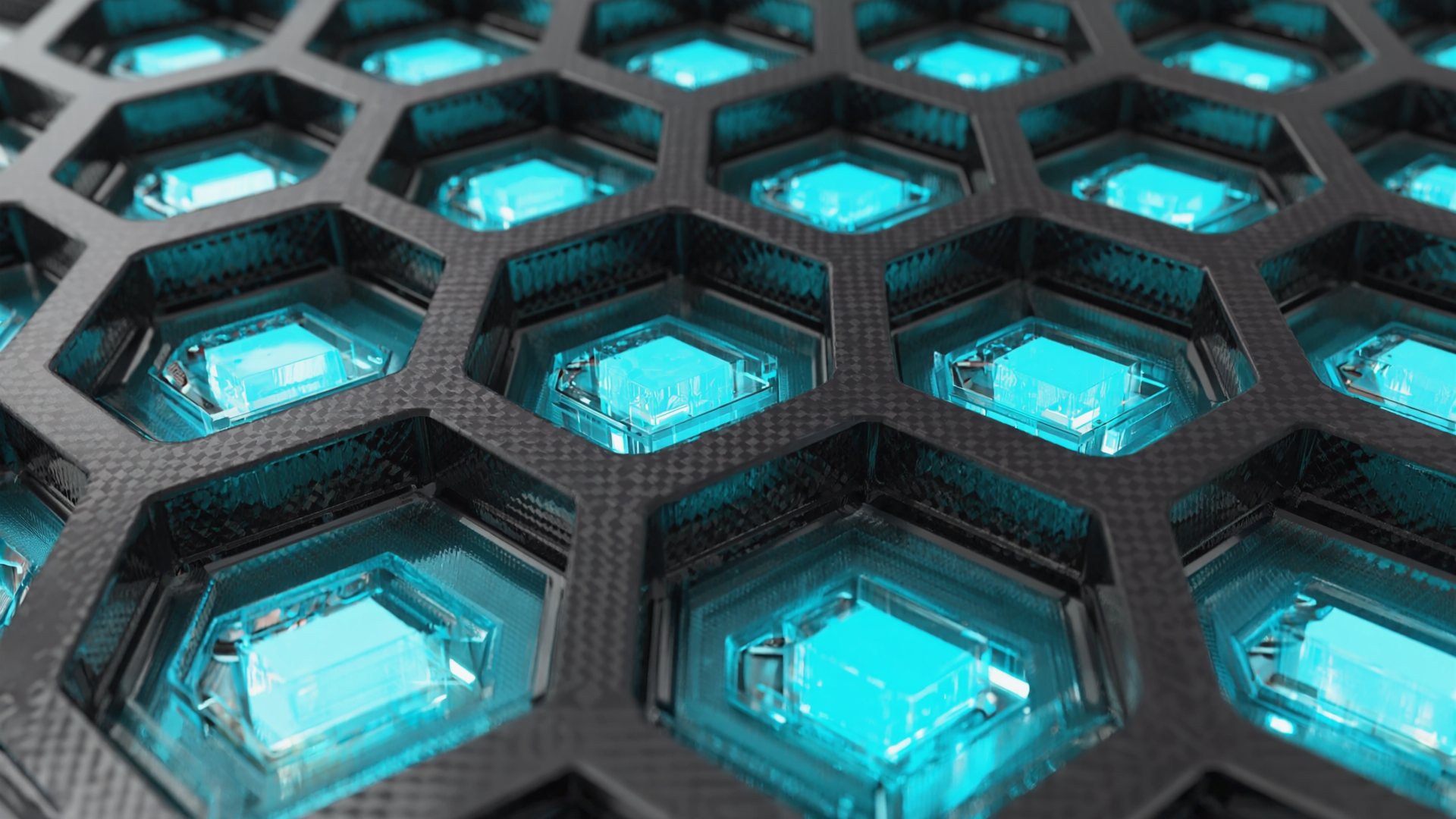
The carbon fiber panel that is also the battery: structural battery composites for drones and EVs
Carbon fiber structural battery composites, panels that carry mechanical load and store electrical energy in the same material, have not left the laboratory-to-prototype…

The shark-skin riblet film on airliner hulls that could cut jet fuel burn by about 1% per flight
Shark-skin riblet film has moved from a single certified application on the Boeing 777 to active certification on three more airliner families: the Airbus A330, Boeing…

The Wood Grown Into a Wire: bacterial cellulose that self-assembles around conductive threads
The phrase "bacterial cellulose grown around a conductive thread" describes two very different technologies that the literature routinely conflates, and the distinction…

The Cage of Glass That Traps a Single Xenon Atom to Sniff Out a Secret Reactor
The most consequential finding in this dataset is not about nuclear waste. It is that a class of ultramicroporous sorbents originally built to strip xenon from…

The Magnet With No Magnetic Field That Flips a Bit in a Picosecond
Altermagnetism has moved from theoretical proposal (2022) to experimentally confirmed band-structure phenomenon (2024) to first electrically switched device physics…

The Wood Grain That Turns Into a Transistor Without Leaving the Tree
The ability to grow conductive circuitry inside a living plant has been demonstrated and reproduced, but nine years after the foundational result the field still has no…

The Wood Chip That Cools a Roof by Beaming Heat Into Space
Cellulose-based passive daytime radiative cooling has crossed the optical performance threshold that used to justify fluoropolymers.

The Magnet With No Magnetic Field: altermagnets that flip a memory bit in a picosecond
The most consequential finding in this dataset is not a device demonstration — it is a symmetry argument that has now been reduced to a simulation with a concrete…

The Wood Fiber Coating That Freezes Into Ice Armor to Save a Wind Turbine Blade
Nanocellulose — wood-derived cellulose nanocrystals (CNC) and cellulose nanofibrils (CNF) — has quietly become the matrix material of choice in three separate anti-icing…
Recent daily briefings on Advanced Materials
- The lead-free quantum dot camera chip that could see through fog and smoke in shortwave infrared
- The carbon nanotube yarn that could replace copper wire in aircraft and satellites
- The carbon nanotube film thinner than a soap bubble that shields an EUV chip mask from a single speck of dust
- The Nanocrystal Film That Splits One Photon Into Two
- The Twisted Crystal That Turns a Magnet Into a One-Way Street for Electrons
- The Carbon Thread Spun From Nanotubes That Could Replace Copper Wire
Open federal contracts and grants to browse
Open SAM.gov contract notices and Grants.gov opportunities, listed by agency and industry code. Each list covers its whole agency or code, not only Advanced Materials work, so check each official notice before acting. The lists are KPsphere AI ScoutBOT’s free public directory, refreshed nightly.
- NAICS 541715: research and development in the physical, engineering and life sciencesSAM.gov
- National Science Foundation grantsGrants.gov
- Department of Energy contract noticesSAM.gov
- All open federal contract notices, by NAICS code, agency and set-asideSAM.gov
- All open federal grants, by agencyGrants.gov
Follow Advanced Materials in depth
The public reports above are free to read. A subscription adds research on Advanced Materials, not published on the site.
Sector Watch for Advanced Materials
- Four subscriber-only deep-research reports a month on your sector, plus a monthly sector landscape.
- Subscriber-only: this research is written for subscribers and is not published on the site.
- After payment you get an email with a link to choose your sector. Choose Advanced Materials.
Also available: Sector Watch + Custom Reports ($100 a month), Multi-Sector ($250 a month), Full Spectrum ($500 a month). Every plan is described in full on the plans page.
Compare plans
See a sample report first
A sample report, made for the plans page, is free to read in full, so you can judge the depth, the charts and the sourcing before paying for anything.
Advanced Materials research: common questions
Who is funding advanced materials research in 2026?
Public funding for advanced materials research is recorded in award databases, and those are the records KPsphere reads: NSF awards, federal grants and contracts on USAspending.gov and Grants.gov, UK Research and Innovation projects, and European projects in OpenAIRE. Where a report finds awards on its topic, it names them and links to the award record, so the funder and the amount can be checked at the source.
Where can I find SBIR and STTR awards for advanced materials?
SBIR and STTR awards are federal awards, so they appear in the federal award data KPsphere searches, including NSF award records and contracts and grants on USAspending.gov, when they match the topic a report is researching. KPsphere does not query SBIR.gov directly, so for a complete list of one agency's SBIR or STTR awards, SBIR.gov remains the primary source.
Which advanced materials startups are raising money?
Public-company activity shows up in SEC EDGAR filings (8-K, 10-K, 10-Q and S-1), and company work shows up in patent filings and federal contract awards. Private funding rounds are largely invisible to open databases, so deep-research reports add a web search for company announcements and keep a result only when it comes with a live source link.
What are the latest advanced materials breakthroughs?
The newest public Advanced Materials reports are listed on this page, newest first. The most recent item in this sector was published on Oct 11, 2026. Key findings in each one link to their sources (recent papers and preprints, patents, awards and filings), so a claimed breakthrough can be checked against the published result.
What does KPsphere cover in Advanced Materials?
Coverage includes metamaterials, graphene and 2D materials, carbon nanotubes, metal-organic frameworks, quantum dots, topological materials, self-healing and smart materials, 4D printing materials, nanofabrication and programmable matter. The research is AI-assisted: AI models search those sources and draft the analysis from them, an automated check tests key claims against the same evidence, and key findings link to their sources.
Is KPsphere's advanced materials research free?
Yes. Every report listed on this page is free to read, and so is the daily briefing, one email each morning rotating across all twelve sectors, Advanced Materials among them. The paid Sector Watch plan, $50 a month, adds subscriber-only research on one sector you choose: Four subscriber-only deep-research reports a month on your sector, plus a monthly sector landscape.
All twelve sectors
The same research, one field at a time.
AI & Machine Learning
Model architectures, training methods, inference hardware, AI safety research
28 research reportsQuantum Computing
Qubit platforms, error correction, quantum networking, post-quantum cryptography
29 research reportsBiotechnology
Gene editing, synthetic biology, protein design, biomanufacturing
31 research reportsAdvanced Energy
Batteries, grid storage, fusion, solar, nuclear, hydrogen
28 research reportsSpace Technology
Launch systems, satellites, propulsion, in-orbit manufacturing
32 research reportsCybersecurity
Offensive and defensive tooling, cryptography, critical-infrastructure security
29 research reportsRobotics
Autonomy, manipulation, humanoids, drones, industrial automation
30 research reportsAdvanced Materials
Metamaterials, superconductors, composites, coatings, nanomaterials
28 research reportsNext-Gen Communications
6G, optical networking, satellite comms, spectrum and antennas
30 research reportsNeurotechnology
Brain-computer interfaces, neural implants, neuroimaging, neuromodulation
27 research reportsClimate Technology
Carbon capture, climate modelling, adaptation tech, sustainable materials
27 research reportsSemiconductors & Photonics
Chip fabrication, photonics, packaging, lithography, novel architectures
The daily briefing, in your inbox
One email each morning on a single development in emerging technology, rotating across all twelve sectors, Advanced Materials among them, with the paper, patent or funding award behind it linked. No card, no trial, and one click to unsubscribe.